
“Fill your paper with the breathings of your heart.”
NEW RELEASES!

|
The Poodle Wears a Pink Tutu may be Susan Beth Furst’s first book, but it has all the earmarks of a master poet in the making. She has a strong command of contemporary English language haiku and tanka, inviting the reader into wide-ranging worlds of whimsy, nostalgia, stark reality, transcendence, and redemption where darkness and light flicker and glitter. The poetic landscape is at once hilarious, poignant, startling, and heartwarming.
Make sure you are strapped in and prepare to be enchanted. Robert Epstein co-author with Ed Markowski of Memo to Warhol: A Collaboration of Art & Haiku in Color. Susan Beth Furst weaves a refreshing journey through her childhood filled with Paddington Bears, the Wizard of Oz, and caramel popcorn. Her travels are chronicled through the various stages, the magical yet honest images evoking joy, disappointment, sadness, and acceptance, all of which add up to one word—life. Through all of this shines Susan’s capacity to see the light, to find hope. A recommended book! High Noon a glint of sun on the crossbeam Geethanjali Rajan author of longing for sun longing for rain: haiku, senryu, haibun, & tanka prose Susan Beth Furst's quirky collection of haiku and tanka is an ingenious mix of simplicity and complexity that leaves a lingering impact. Corine Timmer award-winning haiku poet and creator of the zodiac haiku anthologies |

|
At times we all “stand too close” to ourselves. Beginning with “a childhood spent / in secondhand clothes,” Mary Kendall’s The Last Camellia documents her navigation through suffering and the quest to rediscover herself. In doing so, images from the natural world float in and out of her poems like “the soft rustle / of quivering aspen leaves.”
The poet links and shifts four Japanese forms—tanka, haiku, haiga, and tanka art—in a garden of exquisite images. Shadows and silence remain after “a feeling of you / standing behind me.” A red-bellied woodpecker “flaunts his drumming skills.” A newborn faun wobbles “in old-growth grass.” One cannot fail to notice the sensitive way Mary explores emotions—doubt, loss, sorrow, and the joy of finding oneself. In one revelation, she shows us how “it took sixty years / to find the voice I lost.” Her signature tanka, “the last Camellia,” concludes: “it has taken a lifetime / for me to notice / the beauty in myself.” Each poem is a flower, budding slowly and opening to reveal its fragrance. This is not a book to be skimmed through. It is one to sit with, savour, and quietly celebrate its images of human love and frailty. From this subtle collection, we discover the universal beauty that blossoms in our own souls. —Hazel Hall, author of Moonlight over the Siding The Last Camellia is a beautiful compilation of Japanese short-form poetry. Mary Kendall deftly employs poetics and Japanese aesthetics in her work, creating an evocative and engaging collection. Her haiku juxtapose the natural seasons with seasons of her life, true to the heritage of this poetic form. Her tanka, these “short songs,” link and shift from vivid nature imagery to a thoughtful reflection of her inner landscape. The poet details memories of travels, of grief and loss, and the beauty of imperfection. The subtle sequencing of her work adds depth to the themes she presents, such as in this exemplar: “miscarriage . . . / the very word / betrays / the promise /of hope” linked with this haiku: “abandoned nest / four blue eggs / but no answers.” The Last Camellia is worth several readings to relish the insights therein. —Carol Judkins, author of at the water’s edge |
|
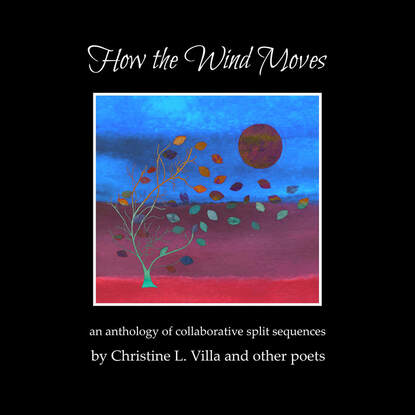
It’s almost as if this new genre called the ‘split sequence’ reveals the white and negative spaces hiding between and behind each line of any haiku you have ever read. If you want to see for yourself how a small poem is but a gateway for worlds you could inhabit, dive into this book and don’t worry about ever resurfacing.
—Alan Summers, founder of Call of the Page The first of its kind, How the Wind Moves features a diverse collection of split sequences by Christine L. Villa, co-authored with a well-rounded cast of writers from the haiku community. Interspersed throughout is gorgeous multi-layered collage work, created by Villa herself, which is a parallel medium that ties in with the sequences. One need not be familiar with the split sequence form or even haiku to appreciate this book. All lovers of poetry and art will enjoy this landmark collection that flows like the wind between universal subjects such as nature, love, loss, illness, healing, hope, and faith. —Robin Anna Smith, co-founder & co-editor of whiptail: journal of the single line poem |
OUR BOOKS
|
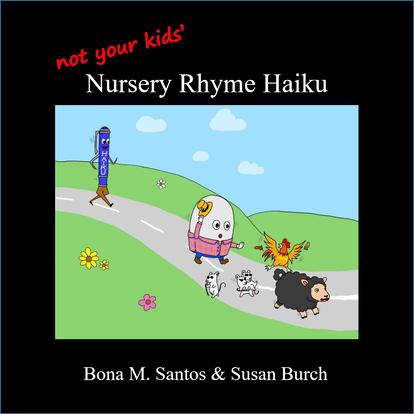
These nursery rhymes or lullabies won’t lull you to sleep!
The format is “single-line haiku,” producing its own delivery of pace, as an impact similar to the tenacity of the original stories in rhyme. —Alan Summers, founder, Call of the Page What’s not to like about this new book of “Not Your Kid’s Nursery Rhyme Haiku,” which takes the punch of a monoku and combines it with nursery rhyme memories of our childhood, starting with Humpty Dumpty and ending with the Farmer in the Dell? Along the way, the authors explore sexual abuse, classroom bullying, and anorexia, along with other difficult subjects. The nursery rhyme references strengthen each scene, providing an extra sock to the gut every time. It’s a very strong collaborative debut collection, and I recommend it highly. —Deborah P Kolodji, California Regional Coordinator for the Haiku Society of America |
Paperback
Ebook
Paperback
Digital Flipbook
|
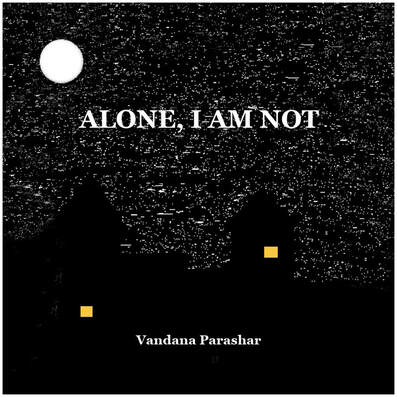
It’s an honor to share words of praise about Alone, I am Not, a heartfelt book by Vandana Parashar. This poignant publication spreads a wide carpet of haiku and senryu pointing out the many forms of bias.
Even the striking cover by Aanvi Parashar depicts that we are all people of this universe, and therefore connected by similar injustices at times on our own lives. From intense haiku to ironic senryu, and striking photos, Vandana covers all aspects of bias on her path to healing. She is a talented wordsmith who exhibits an exceptional use of language skills, a sense of rhythm, and uncanny vision. --an’ya, past editor of Ribbons and Tanka Origins Vandana’s second collection, Alone, I am Not, is dedicated to all those subjected to prejudice, harassment, injustice because of sex, race, colour, ability and sexual orientation. The collection does not disappoint in poetic quality at a time when the world is mired in widespread bigotry and hatred. Vandana’s poems take the personal and make it political in the best possible way. There are some high-quality haiku, haiga, and senryu poems in this collection which display sensitivity, irony and wit. My personal favourites are the combination of Unsplash’s art with Vandana’s poetry: “victim-blaming a lacy bra on the clothesline” and “in the deep spaces between polarities my self-worth.” An excellent chapbook well worth checking out for topical and political poetry. --Dr. Tim Gardiner, former tanka prose editor of Haibun Today and poetry editor of Suspect Device punk fanzine. The tan renga of Anna Maris and Marcus Liljedahl are supple dances in which they take turns being the lead without missing a step. Then, during breaks, they charm the audience with the nuances of the form. This book is destined to become a landmark work on tan renga. —George Swede, Award-Winning Poet |
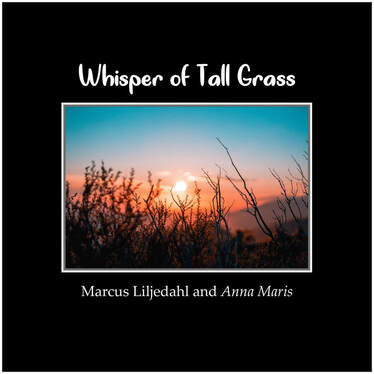
Liljedahl and Maris are beautifully in tandem here in this new book of tan renga poems. The journey of these two sensitive poets takes us through the enriching stages of a writing friendship. From trains to lakes, through snow to sunshine, in the rain and under blossoms, we chart their short-form progress into our ever-changing world of seasons and of lost moments in time.
morning mist
faint reflections of light
in a bus window
just around the corner
a glimpse of what might have been
Anna Maris and Marcus Liljedahl
As for “what might have been,” so many of us can relate to a moment that is forever transient. Why don’t you stow away with Marcus and Anna and hear for yourselves the whisper from tall trees and distant wind chimes?
—ai li, Creator of Cherita, Editor and Publisher of the cherita
From their first tentative chat on Facebook Messenger to the powerful dialogue of the next three poems, the tan renga duo of Anna Maris and Marcus Liljedahl doesn’t mince words. Each new piece grows in confidence as the poets grow more familiar with tan renga and each other. This book is a masterclass in friendship and classic writing.
—Peter Jastermsky, Creator of Split Sequence, Co-Author of Just Dust and Stone
Paperback
Digital Flipbook
|
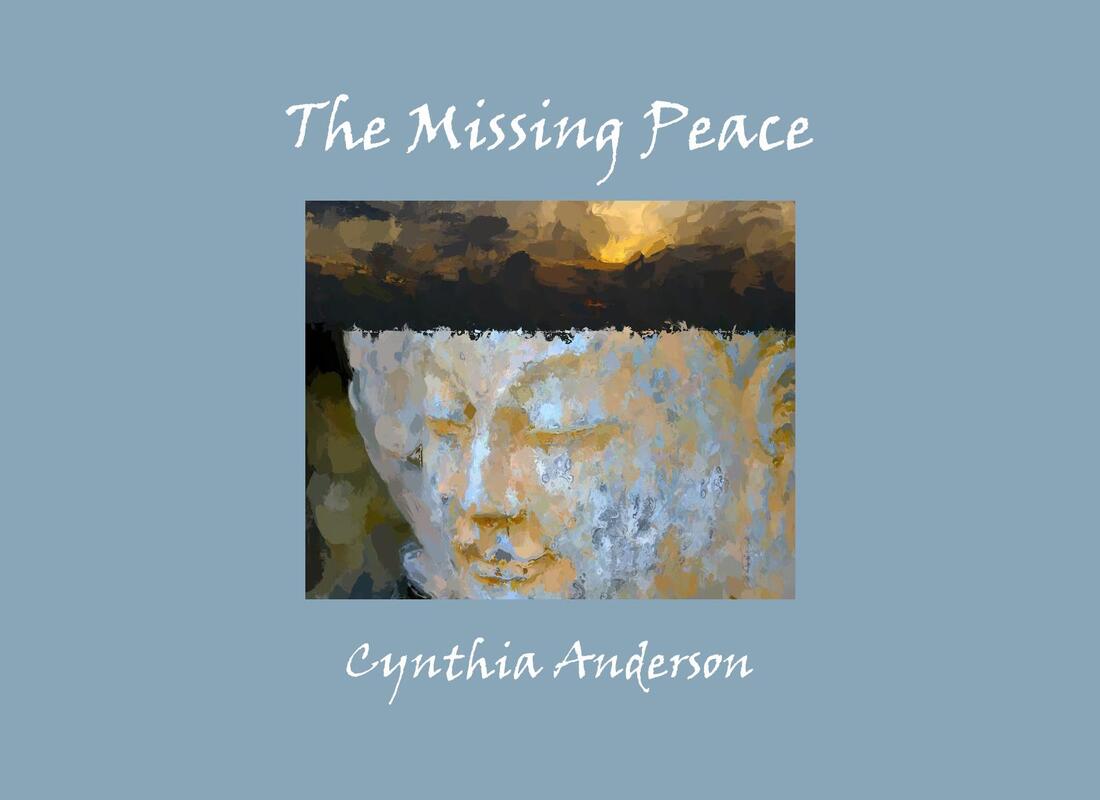
When we lose our mothers, we often mourn two losses: the relationship we had and the one we didn’t. It’s these losses that Cynthia Anderson attempts to reconcile in The Missing Peace. Weaving a narrative of masterful short-form vignettes—cherita, tanka, and haiku—she shares a poignant journey.
—Peter Jastermsky, Author of Steel Cut Moon and The Silence They Came For What is missing from memory has always been the flesh and bones of what could have been. There is never any peace in the void of loss. Cynthia Anderson braves the elements of regret by presenting us with a book about how to be brave and truthful in the face of loss. —ai li, Creator of Cherita, Editor and Publisher of the cherita I can relate to this honest, raw, and daring poetry book. The Missing Peace can heal and transform all who read it and bring to light that not everybody had an unconditionally loving mother, like we want to believe. Read it and become enlightened. —Pamela A. Babusci, Editor of moonbathing: a journal of women's tanka |
Paperback
Digital Flipbook
|
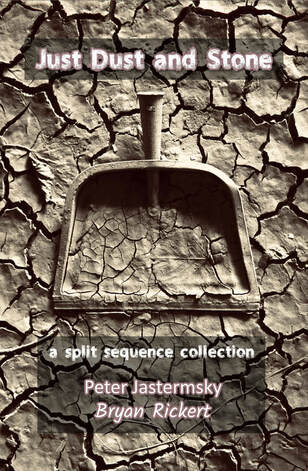
Haiku poems, known the world over, originated from collaborative poetry recognized as renga, and then later renku, which Matsuo Bashō made famous. Here is an entirely new and exciting experiment between two poets who are prepared to stretch their poetic muscles.
Content warning: This may prove poetically addictive! —Alan Summers, Founder of Call of Page and President of United Haiku and Tanka Society Just Dust and Stone is nothing short of a masterpiece. Bold yet intimate, these visionary poems are pure magic. With intricate dynamics and seamless transitions, it is clear that Rickert and Jastermsky are not only masters of their craft but also a powerhouse team. A must-read! —Tia Haynes, Editor of Prune Juice |
It is rare for two poets to work together seamlessly and consistently, but that is what Peter Jastermsky and Bryan Rickert have done over the last years with their split (haiku) sequences. Forty-eight are included in this collection, and they are all gems. Sit back, relax, and be prepared to be charmed and surprised, time and again. Wonderful.
--Lew Watts, haiku poet
Taking us through romance, love and loss, Peter Jastermsky’s collaboration with Bryan Rickert is a well written, though-provoking, and heart-wrenching book of split sequence poems. Each split sequence poem interlaces sprouting haiku inside a seed haiku, which leaves the reader thinking, dreaming, reminiscing, emoting, and wanting, much, much more.
--Michael H. Lester, haiku and tanka poet
A challenging new form from Peter Jastermsky, in collaboration with Bryan Rickert, sure to excite the avant-garde that lurks in the hearts of all adventurers in the burgeoning new world of short- form poetry. You will definitely read these split sequences more than once and in more than one way. A masterful work full of fresh imagery and insight.
--Larry Kimmel, former editor of Winfred Press
